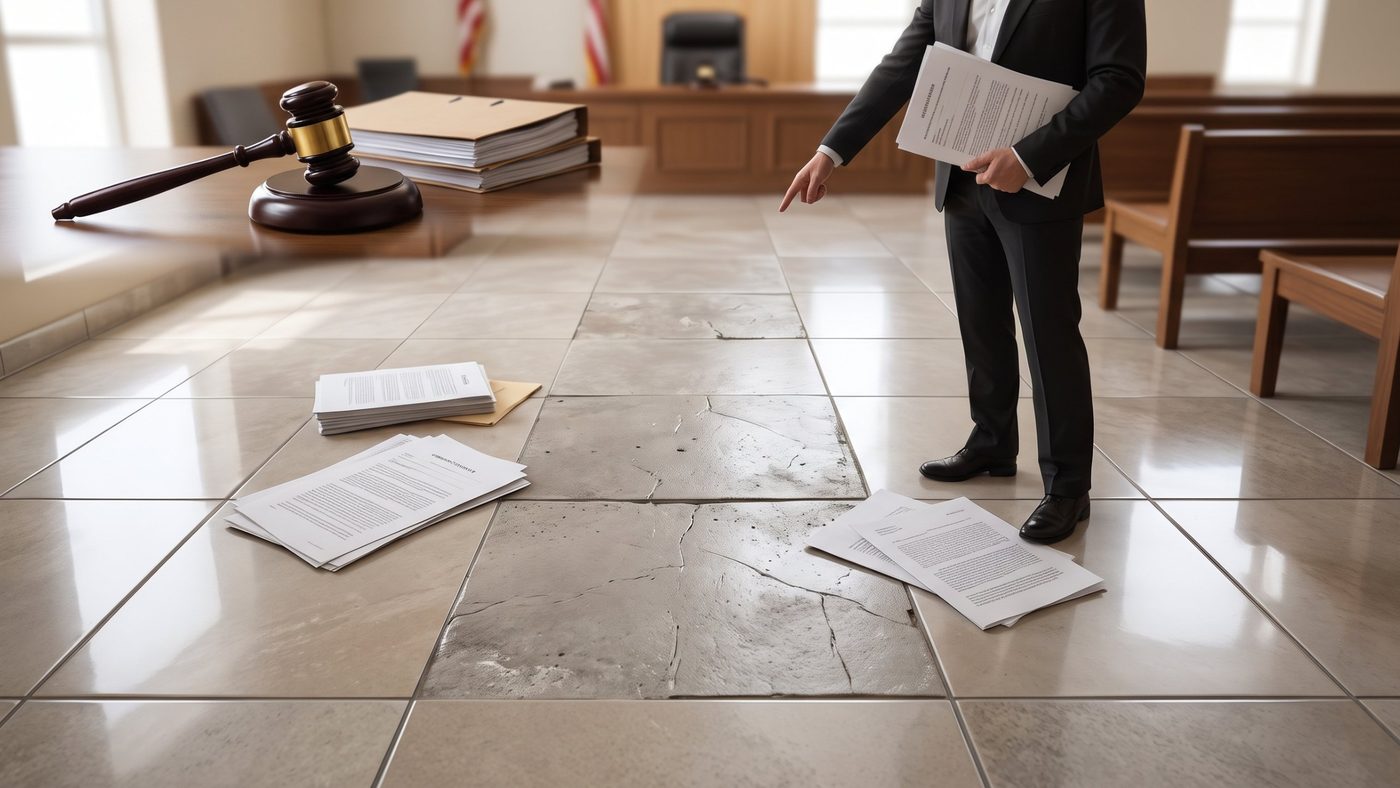
You bought new floor tiles, paid for installation, and a few months later the tiles in the middle of the rooms are no longer glossy? A new ruling by the Ashdod Magistrates' Court holds that in such a case the store that sold the tiles is liable, even if the Standards Institution of Israel found them compliant.
What happened
In August 2020, an Ashdod resident bought glossy ceramic tiles from a building-supplies store, paying about ILS 21,700. They were installed in her apartment in September 2020. About three months later, she noticed that the tiles were losing their shine, changing color and getting scratched, even though she used them in a completely normal way.
She contacted the store. A representative of the importer visited the apartment and said the tiles had no defect. As a goodwill gesture, he offered to polish the tiles or replace a few of them. She refused and sued for ILS 80,000.
What the store argued
The store argued that the tiles were sound and met the Israeli standard. In its view, the wear was caused by construction work in the apartment without protecting the floor, by harsh cleaning products or by improper use. It also relied on a test by the Standards Institution of Israel, which found the two tiles tested fully compliant.
What the court decided
Judge Yehuda Libliyan accepted the claim in full. These were the main reasons:
- The shine survived where nobody walks. The court-appointed expert found the glaze intact under a bed and on the balcony's side walls, and gone along the walking paths. The judge visited the apartment himself and saw that the tiles were glossy next to the walls and closets and dull in the middle of the rooms and in the hallway. In his words, the only possible explanation is a defect in the tiles.
- Walking is reasonable use. The store argued that the standard allows a certain amount of wear. The court replied that walking at home is exactly the use floor tiles must withstand, and that such wear is unacceptable after a few months, or even after a few years.
- The Standards Institution test did not settle the matter. The store did not call the Institution's staff to testify. Nor did it show that wear over time, under normal walking and cleaning, had been tested. So the test did not contradict the court expert's opinion.
- Claims without evidence were rejected. The store did not prove that construction work was done in the apartment, that harsh cleaning products were used, or that the occupants used the floor abnormally.
- A building technician can serve as an expert. The store asked to disqualify the court's expert because he is a certified building technician rather than an engineer. The request was denied. The court found the opinion professional, and the expert held up under cross-examination.
- The whole floor must be replaced. The wear is visible throughout the apartment, so replacing a few tiles makes no sense. Reinstalling the same tiles would not solve the problem either, because the defect is in the tiles themselves.
The outcome
The store was ordered to pay ILS 80,000, plus linkage differentials and interest from the date the claim was filed, and ILS 15,000 in legal fees and costs.
There is another lesson here. The expert estimated the cost of replacement at ILS 79,853. The judge noted that higher amounts could have been awarded for alternative housing and emotional distress. But because she had capped her claim at ILS 80,000, only ILS 147 was left for those items. In other words, the amount you claim at the outset directly limits what you can receive at the end.
Key takeaways
- A defect that appears quickly is important evidence. If the floor wears down after a short period of normal use, that points to a defect in the product.
- "Meets the standard" is not the end of the story. A lab test of a few tiles does not necessarily prove the product is fit for use in a home.
- Document early. Photograph the floor, especially the difference between areas people walk on and areas they don't. Keep receipts and written complaints to the store.
- Don't rush to tear it out. Tiles left in place are the best evidence, both for the expert and for the court.
- Calculate your claim amount carefully. Include the cost of replacement, alternative housing during the work, and emotional distress.
Bought tiles, bathroom fixtures or finishing materials that turned out to be defective, and the store or importer refuses to take responsibility? The office of Adv. Shlomo Yehoshua Levi will be happy to review your case.
This article summarizes a published Israeli court decision in plain language and is not legal advice. Every case depends on its facts. The parties' names have been omitted. This is a first-instance decision and may be appealed.